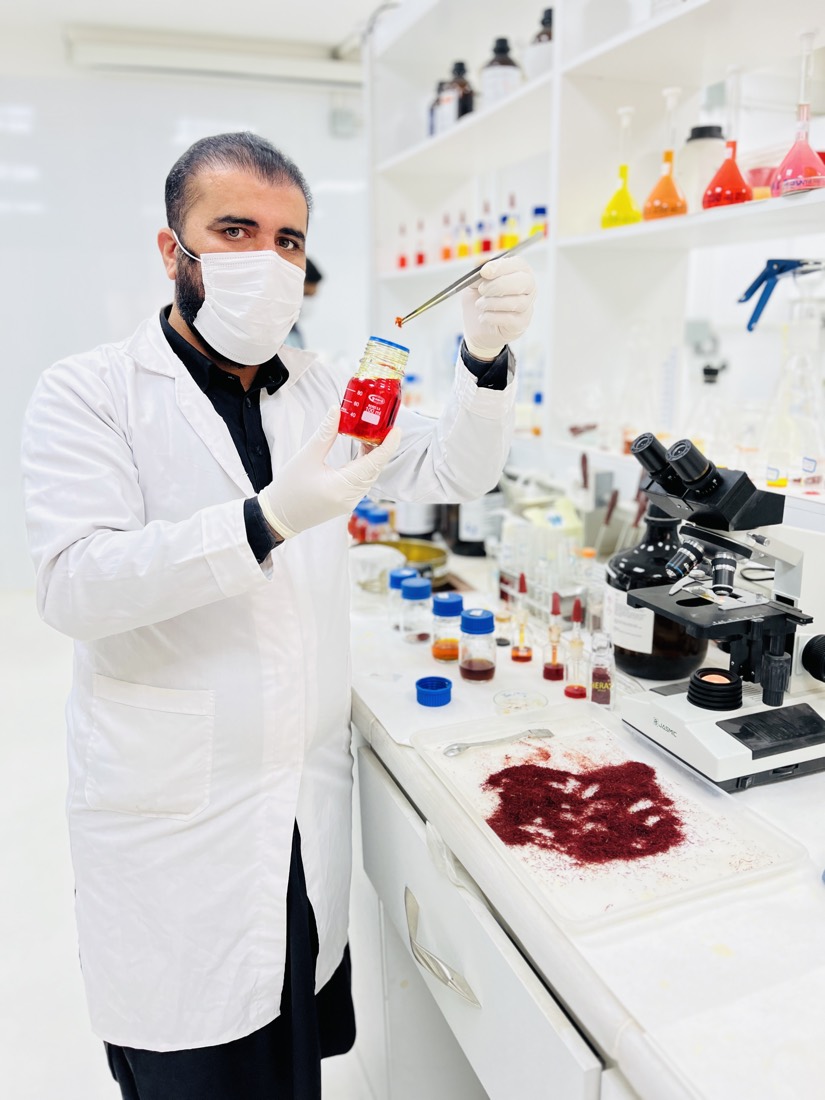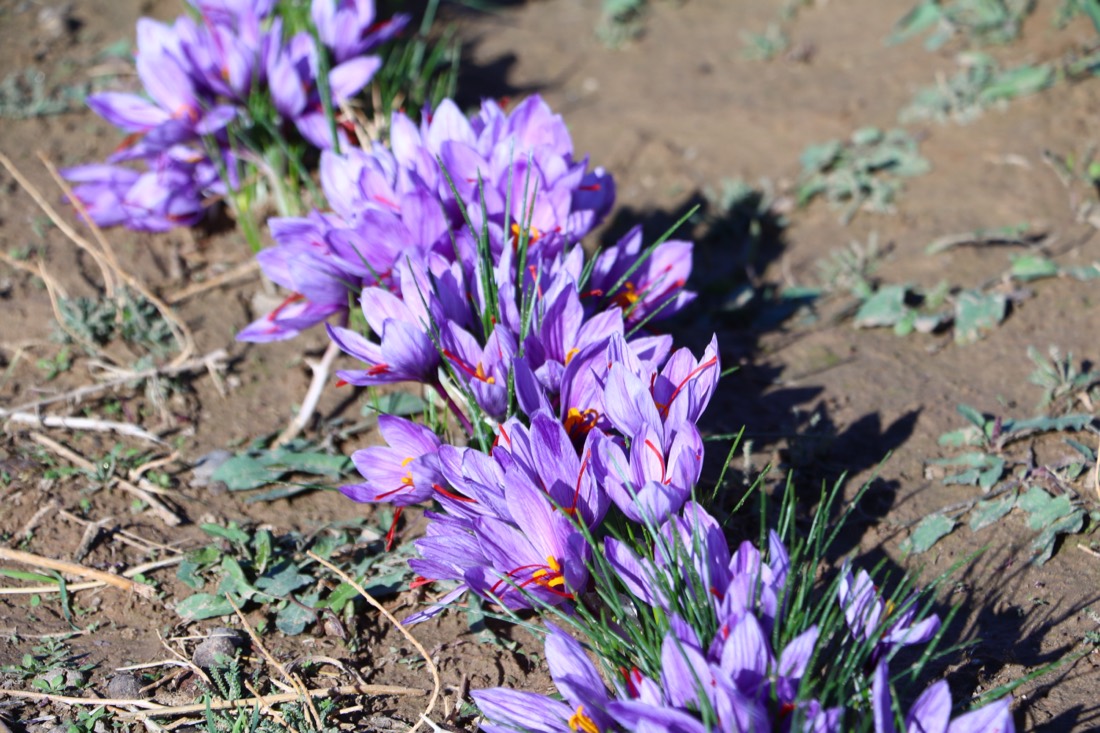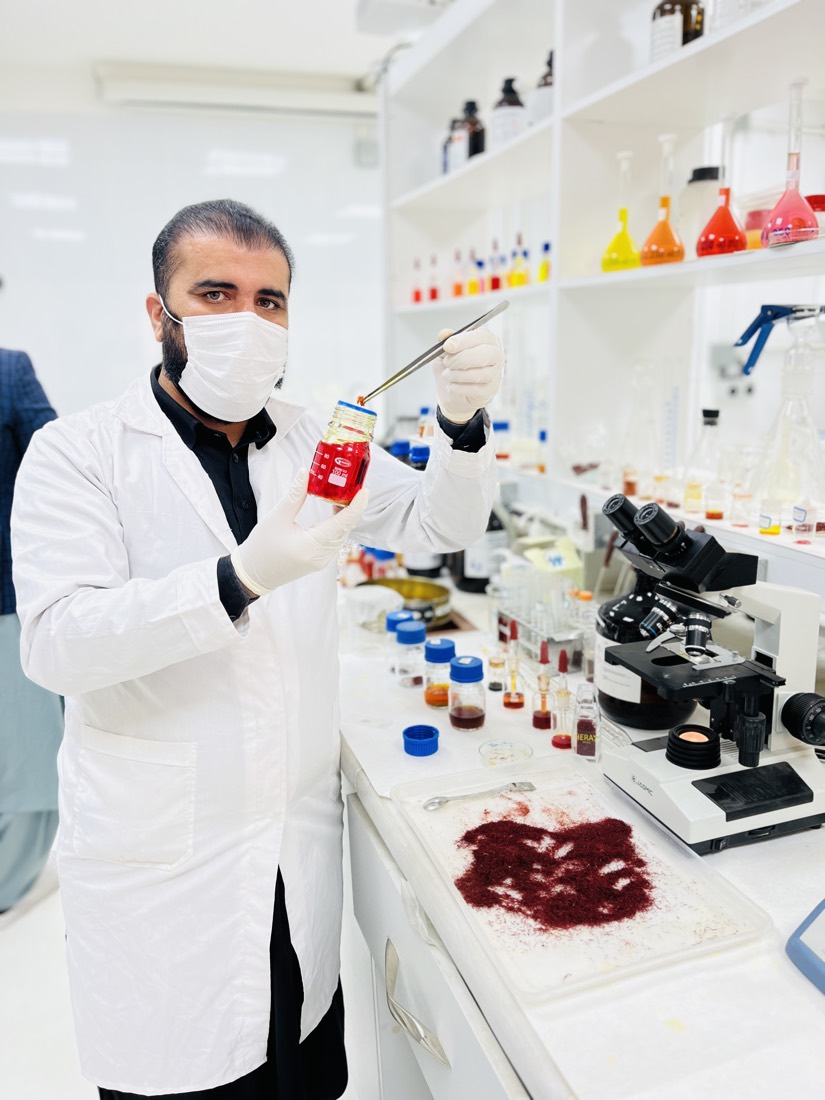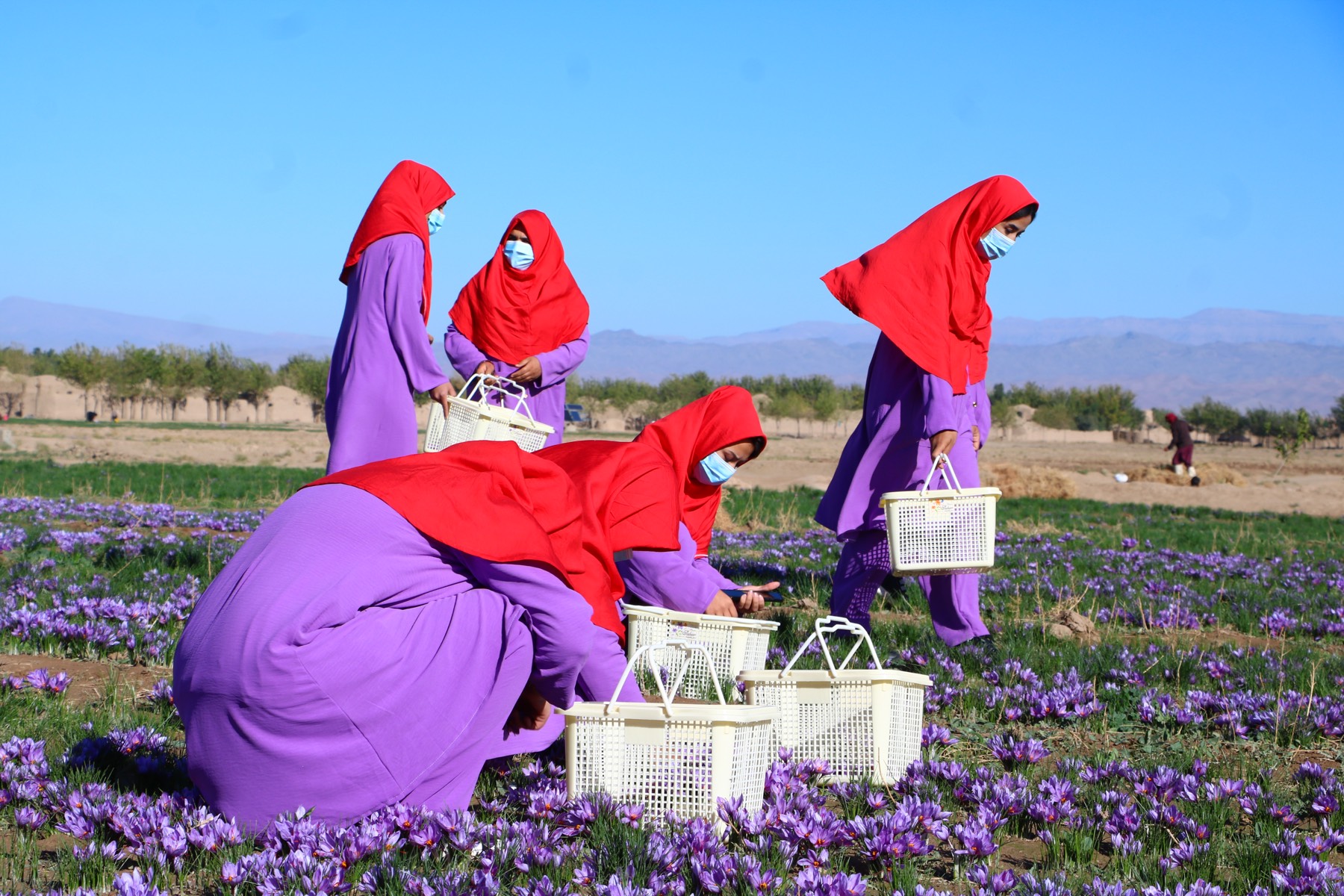
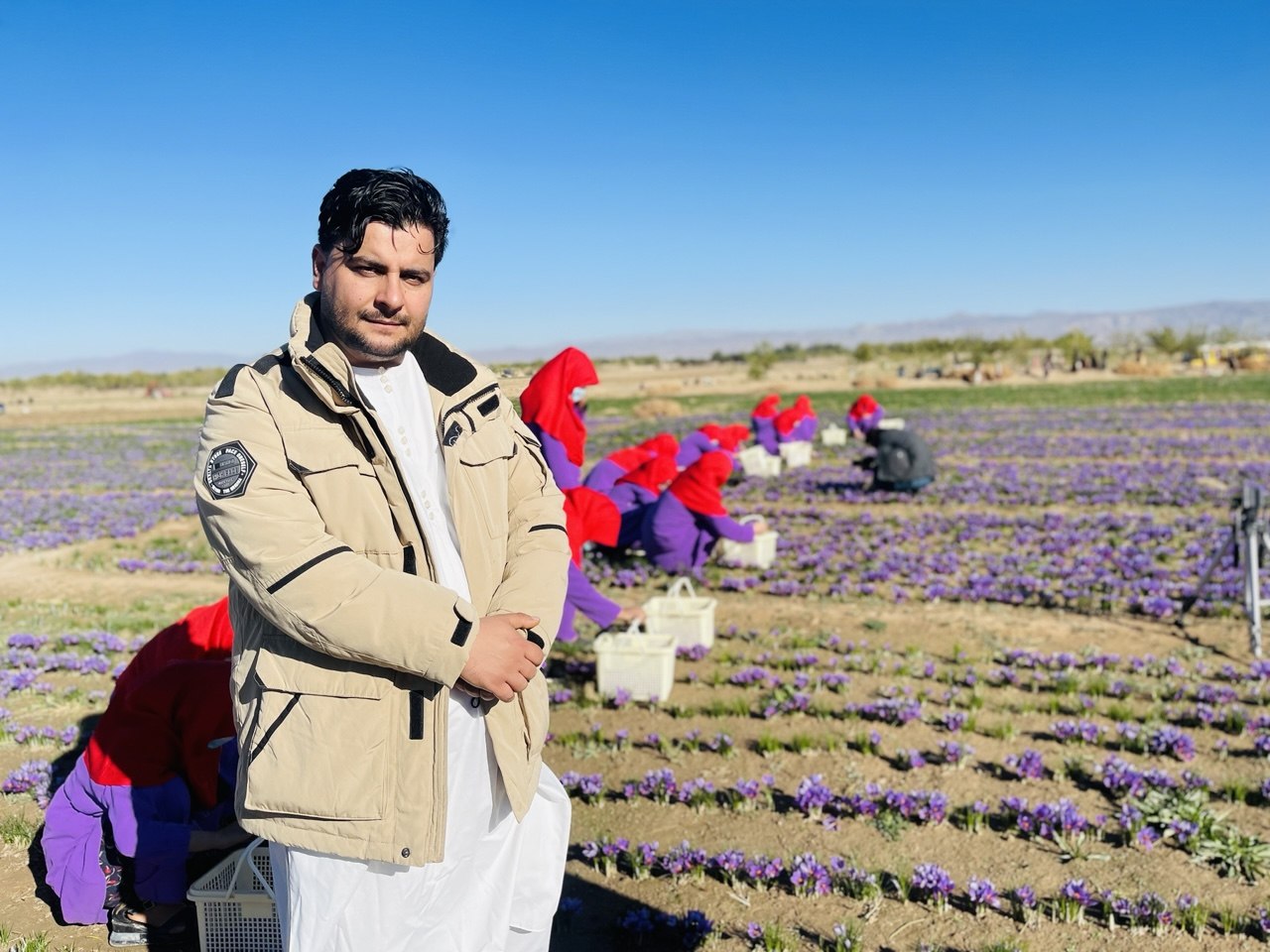
Each October, a narrow window opens in the highlands of Herat. It lasts, at most, two weeks. The crocus sativus flowers that have been growing underground since spring emerge all at once, bloom briefly in the cold autumn air, and if they are not picked in time, they close and are gone until the following year. Everything Aqiq Saffron does for the eleven months before this moment leads to those fourteen mornings.
Why the window is so short
Saffron doesn't keep a precise schedule. The flowers appear when temperatures drop and daylight shortens — in Herat's highland growing areas, that's usually sometime in the first two weeks of October. Our agronomists and farming partners monitor the fields through September, watching for the first purple petals pushing through the soil.
When they appear, the clock starts. Each flower blooms fully for only one to two days. The entire field's window is roughly two weeks. Miss it, and that harvest year is gone. There is no extension, no second chance, no catching up. This is one reason good saffron is expensive — not because of the product itself, but because of the unforgiving arithmetic of cultivation.
"A gram of dried saffron represents about 150 hand-picked flowers. On a good morning, an experienced picker harvests 600 to 800 of them."
Before dawn in the fields
Our farmers begin before sunrise. This is not tradition for its own sake — it is chemistry. Saffron's aromatic compounds, particularly safranal, are most concentrated in cool air. Once the sun warms the petals and the flowers open fully, the stigmas begin releasing their volatile oils. Pick them too late and you have already lost part of what makes Herat saffron exceptional.
In practice, this means our farming families are in the fields by five or six in the morning, working by headlamp in the first grey light of dawn. Every flower is cupped in a hand. The petals are held apart, and the closed blossom is plucked cleanly from the stem. No mechanisation is possible. Saffron flowers are too fragile, the stigmas too fine, the timing too critical for any machine yet made.
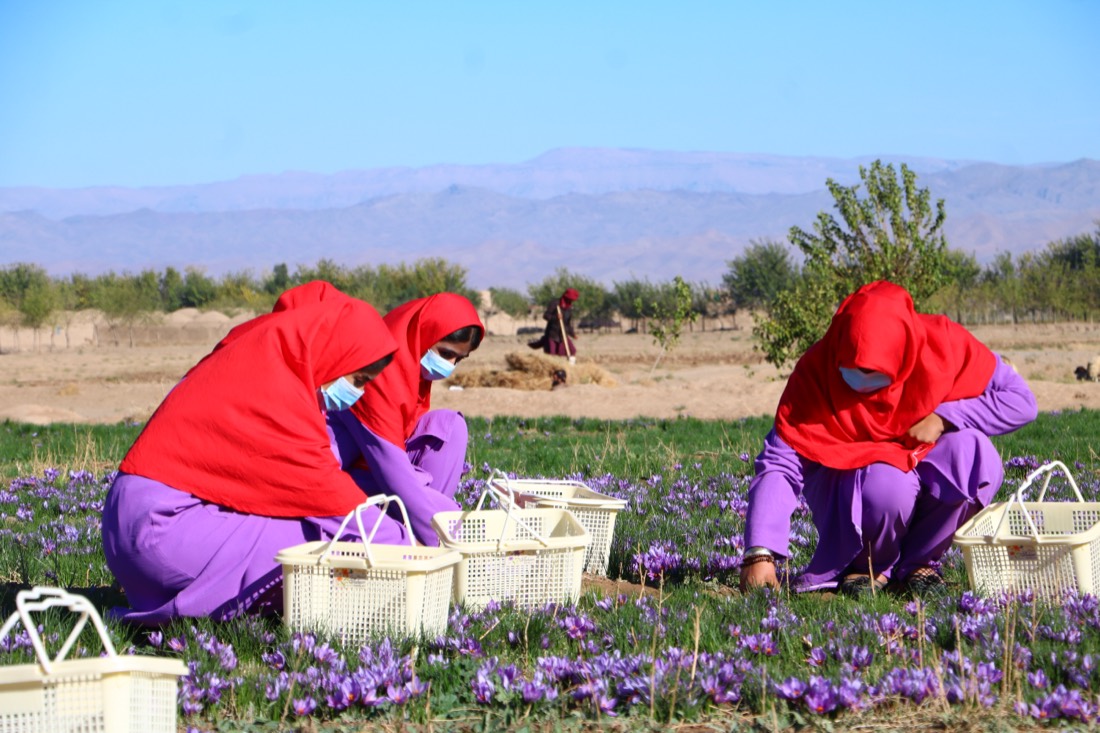
Harvest in numbers — A single gram of dried saffron requires approximately 150 flowers. One experienced picker harvests 60–80 grams of fresh flowers per hour. The harvest window in Herat runs 10–14 days. From field to drying facility, fresh flowers are processed the same day.
The separation — the slowest step
Harvested flowers are brought directly to our processing facility the same day — often within hours. This urgency matters. Fresh saffron flowers deteriorate quickly once picked, and delay at this stage costs colour and aroma before a single thread is ever dried.
At the facility, the work shifts to precision. Each flower is opened by hand. The three crimson stigmas at the heart — the part that becomes the saffron thread — are pulled free from the yellow style and surrounding petals. It is slow, repetitive work that demands good light, a steady hand, and an experienced eye.
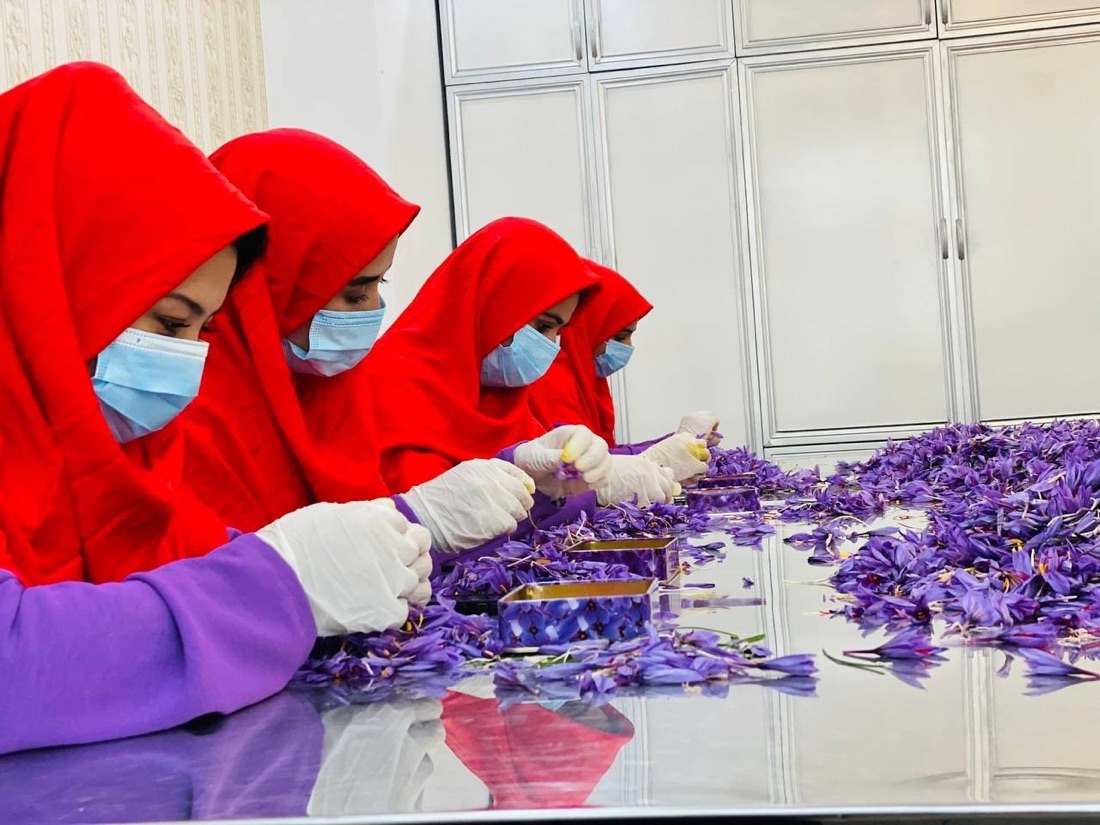
In our operation, this work is done almost entirely by the women of our community. We pay well, the hours are structured, and the environment is hygienic. The quality of this step is what separates Super Negin — where every thread is long, unbroken, and fully red — from lower grades where the separation was less careful.
Drying — where chemistry is locked in
After separation, the fresh stigmas go straight to drying. This is where saffron's quality is either preserved or permanently damaged.
Drying too fast, at high heat, breaks down crocin and safranal — the compounds that give saffron its colour and aroma. Drying too slowly allows moisture to sit, which promotes microbial growth and off-flavours. The window for getting it right is narrow. We use controlled natural drying conditions — no additives, no chemical accelerants — with temperature and humidity monitored at each stage.
A batch dried correctly will retain its aromatic profile for up to three years in proper storage. A batch dried incorrectly will show low crocin on a COA, a muted aroma, and a colour that doesn't perform in cooking. This is the point at which quality is made or lost — not in the lab, not in the packaging, but in these hours after harvest.
What this means if you're a buyer
When you see a high crocin number on a Certificate of Analysis — say, 270 or above — it means the harvest was timed correctly, the separation was done promptly on the day of picking, and the drying was controlled. Those numbers are not just a quality mark; they are evidence of a supply chain that worked under time pressure without cutting corners.
When you see 180 from a supplier claiming "premium" or "Category I" saffron, something went wrong in those fourteen days. Either the flowers were picked late, held overnight before separation, dried aggressively, or the COA belongs to a different batch than the one in the package.
This is why we assign a traceable lot code to every Aqiq Saffron export package. That code links back to the specific harvest batch, the COA results, the harvest dates, and the farm of origin. If you want to confirm the details behind your lot, our export team can walk you through them.
The harvest window closes in two weeks. Everything before it is preparation. Everything after it is follow-through. But those fourteen mornings before dawn in Herat are where saffron is actually made.