From flower to thread, traced.
Saffron is the most labour-intensive spice on earth. Each gram represents roughly 150 hand-picked flowers, opened one by one at dawn. Here's how it happens.
Saffron is the most labour-intensive spice on earth. Each gram represents roughly 150 hand-picked flowers, opened one by one at dawn. Here's how it happens.
Saffron crocus bulbs are planted in Herat's mineral-rich, well-drained highland soil. The fields rest for years between cycles. Irrigation is precise and minimal — saffron thrives on dryness.
Our partner farmers have worked this land for generations. The bulbs they use are descended from the originals that put Afghan saffron on the map.
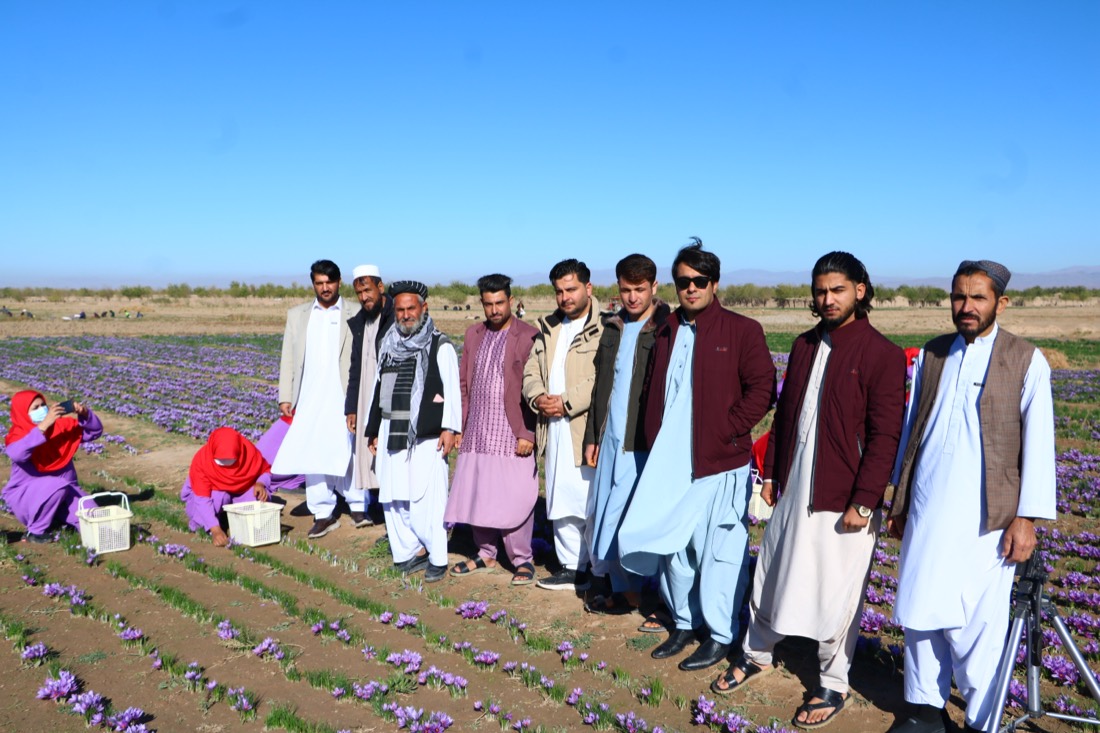
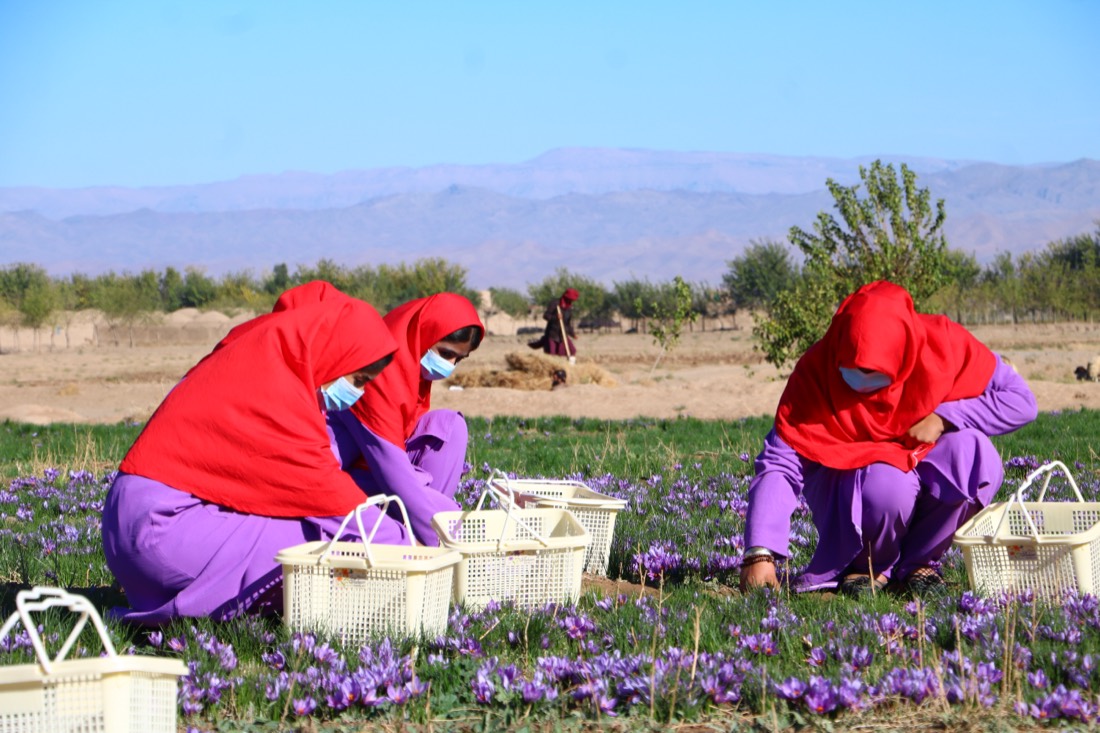
Saffron flowers open only briefly each morning. Our farmers begin picking before sunrise, when the temperature is cool and the stigmas are still tightly closed inside the petals.
Every flower is plucked by hand. No mechanization is possible. The window is roughly two weeks per year — and once it passes, that harvest is gone until the next October.
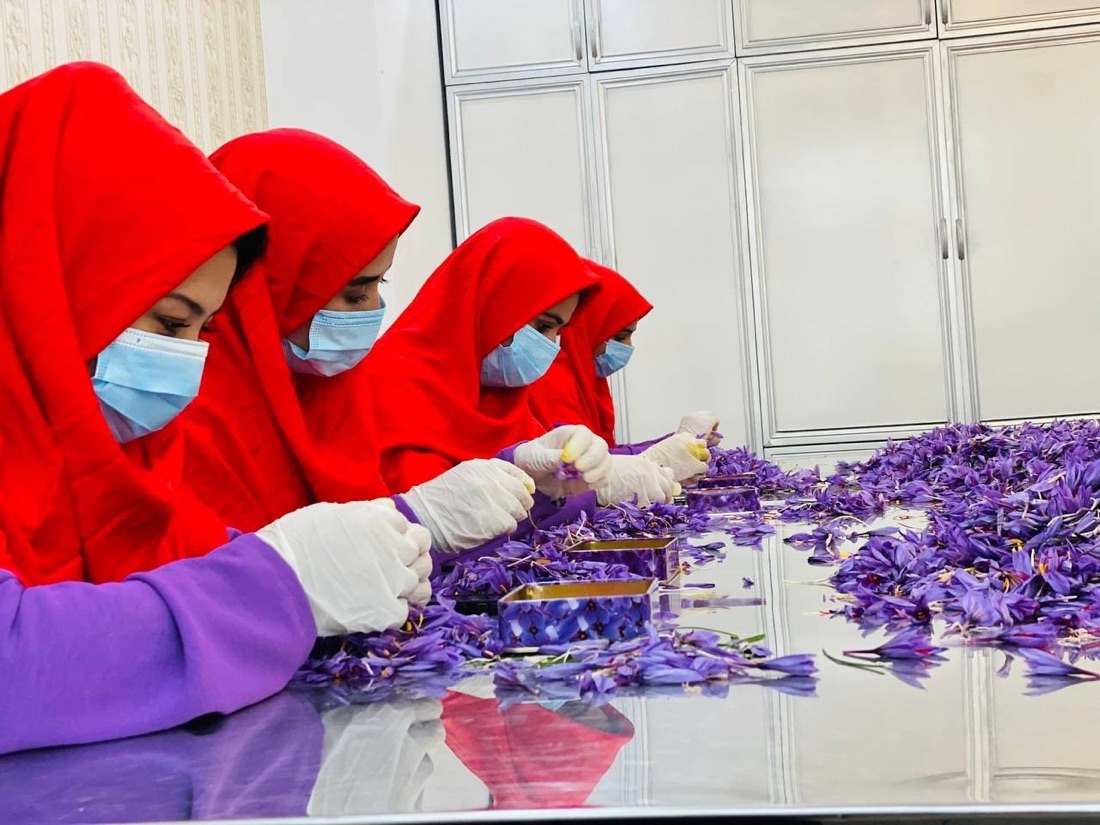
On the day of harvest, each flower is opened by hand. The three crimson stigmas at the heart are pulled free from the yellow style and the surrounding petals.
This is the slowest, most delicate step. It is done almost entirely by women in our community, in well-lit, hygienic facilities — work that requires patience, precision, and a steady eye.
The fresh stigmas are dried under controlled natural conditions. No chemicals. No additives. No accelerants. Temperature and humidity are managed to preserve the saffron's natural oils — crocin, picrocrocin, safranal.
Get this wrong and you destroy a year of work. Get it right and you lock in the aroma, the colour, the flavour for years to come.
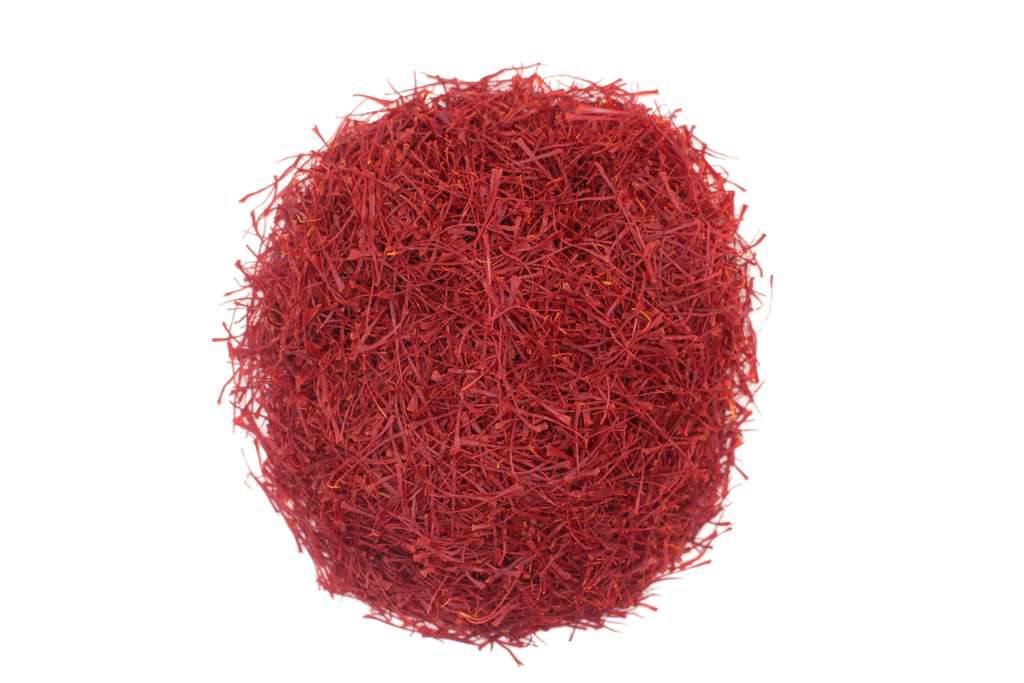
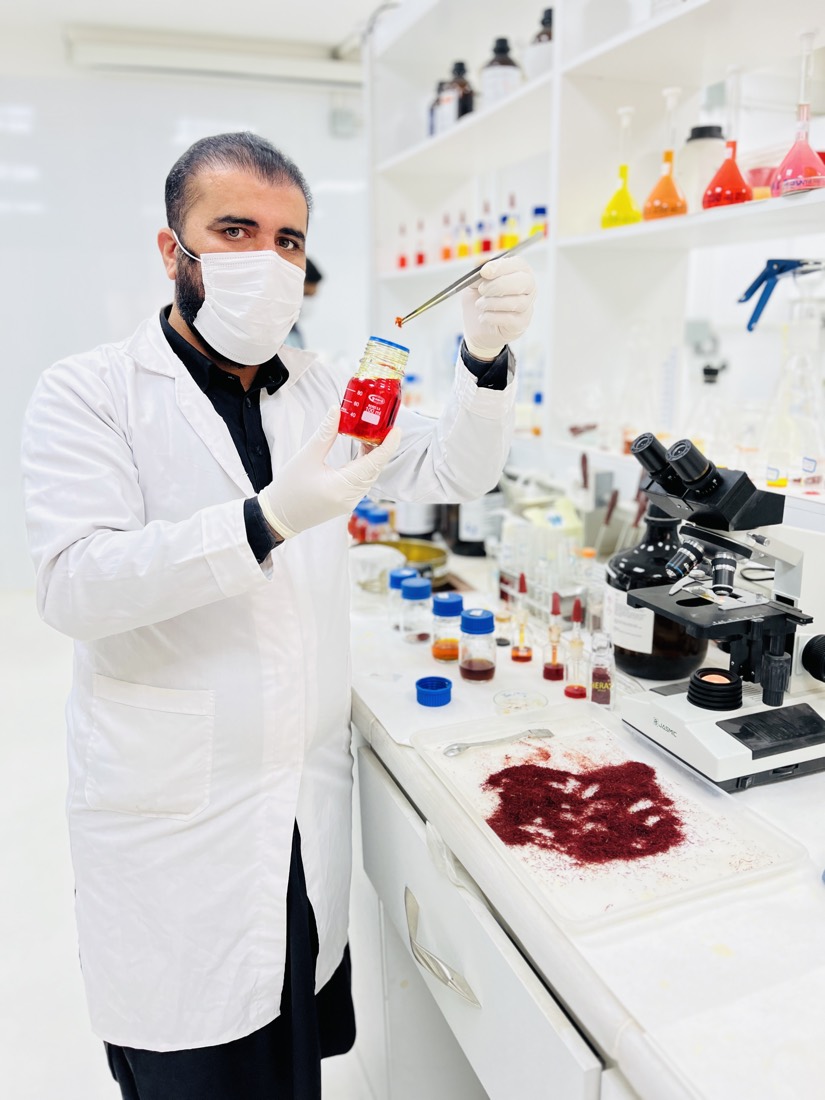
Dried threads are visually inspected and sorted into our six grades — Super Negin, Negin, Pushal, Sargol, Powder, and Bunch Daste. Samples from every batch are sent to independent labs.
We test for crocin (coloring strength), picrocrocin (taste), safranal (aroma), moisture, and microbiological safety. Each batch gets a Certificate of Analysis. Each lot gets a traceable code.
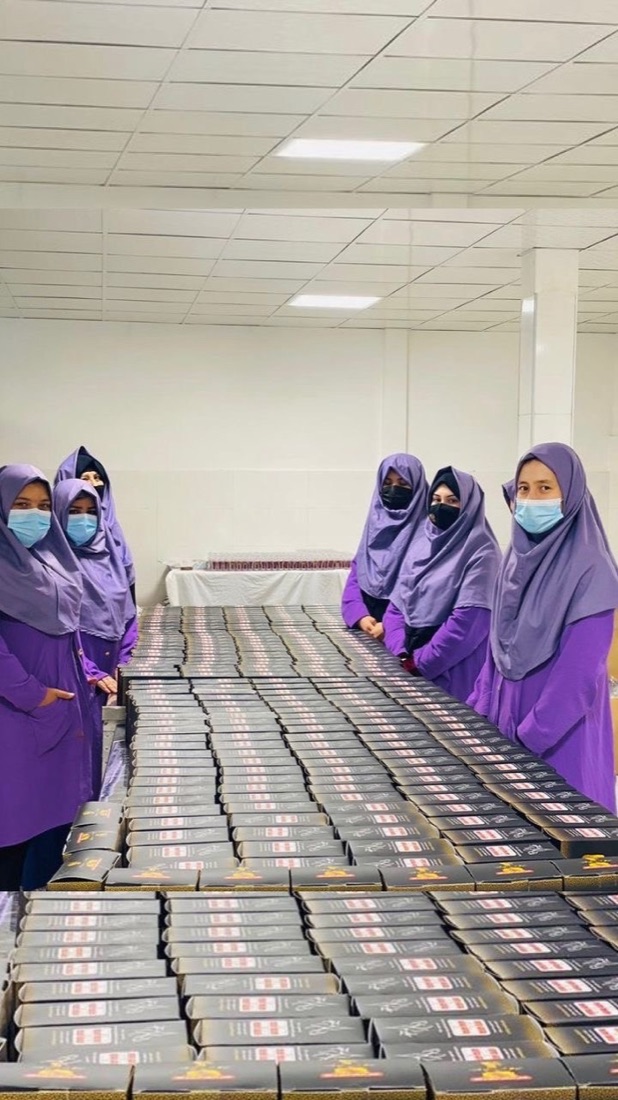
Graded saffron is packed under hygienic conditions in food-safe materials: glass jars, tinplate, foil pouches, or bulk export cartons. Every package is sealed, labelled, and assigned a unique lot code.
Wholesale shipments include the Certificate of Analysis. Private-label and custom packaging are available. Cold-chain logistics handle the journey to your warehouse.
Saffron flowers bloom for two weeks each autumn. Everything we do, all year long, leads to those fourteen mornings of careful, urgent work.
Fresh stigmas must reach the drying facility within hours of being picked. Once dried, our saffron retains its quality for up to three years if stored properly — which is why getting harvest and drying right matters so much.
If you're planning a wholesale order, the best time to book is between November (new harvest available) and the following August. Stock from the most recent harvest is always our most aromatic.
Our agronomists visit partner farms throughout the growing season. We check soil health, irrigation, bulb quality, and harvest readiness.
Every batch is visually graded by trained processors. Moisture, thread length, yellow style, and visual purity are checked before any export packaging.
Samples from every batch go to an independent lab for ISO 3632 testing. Crocin, picrocrocin, safranal, and microbiological safety.
Every export package carries a unique lot code that ties it to its harvest date, grade, lab results, and farm of origin. Contact our export team with your lot code and we'll confirm these details for you.
ISO 3632 is the international standard that classifies saffron into Categories I, II, and III based on coloring strength (crocin), aroma (safranal), and taste (picrocrocin). It is the only objective measure of saffron quality. Every batch of Aqiq saffron is tested and classified.
Yes. We provide paid samples (typically 5–10g per grade) shipped worldwide. The sample cost is credited toward your first wholesale order. Request a sample here.
Yes — for orders of 5 kg or more we offer custom labels, branded tins, custom glass jars, and full private-label packaging design. Lead time is 3–6 weeks depending on packaging complexity.
When stored in airtight, light-resistant packaging at cool room temperature, our saffron retains its quality for up to 3 years. Coloring strength is most pronounced in the first 12–18 months after harvest.
We use established international couriers (DHL, FedEx) for sample and small wholesale orders, and dedicated freight forwarders for container-scale shipments. We handle export documentation, customs, and HS-code compliance.
Samples start at 5g. Wholesale orders begin at 1 kg per grade. Private-label orders begin at 5 kg per SKU. Container-scale pricing kicks in at 100 kg+.