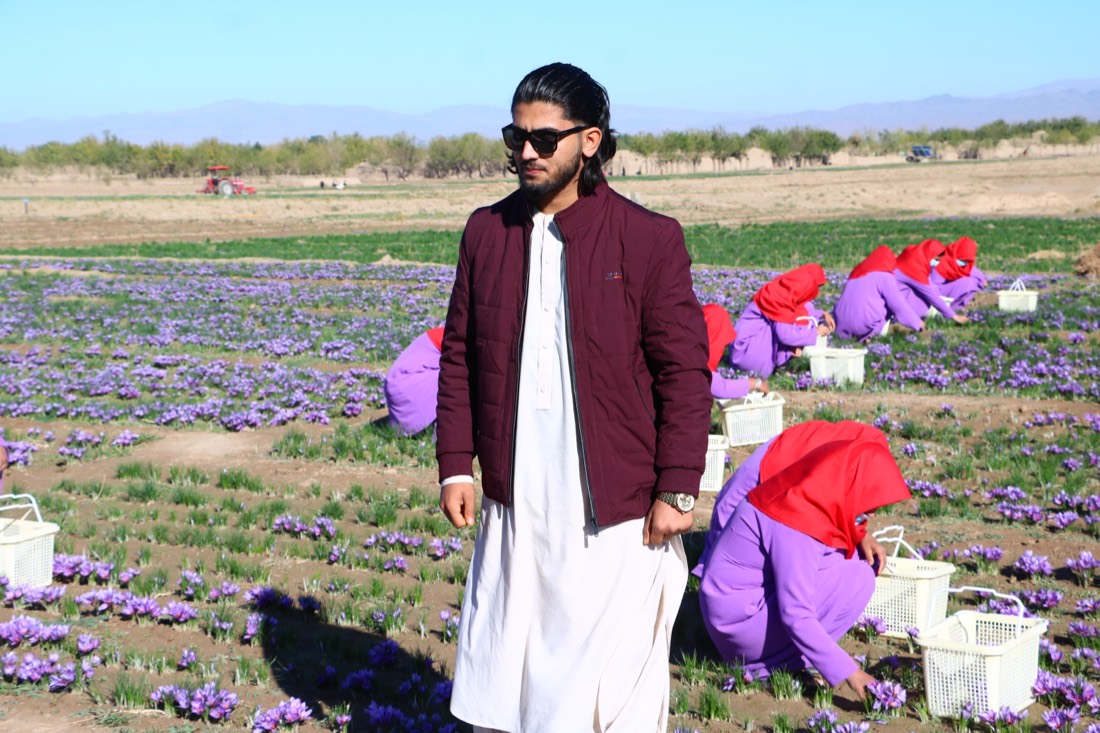

Herat saffron is regularly judged among the finest in the world. What surprises most buyers is how young the industry actually is.
The threads reach back to antiquity. The business that ships them to you is barely a generation old.
Here is how Herat became the world’s premier saffron region — the real history of Afghan saffron, not the brochure version.
Ancient Roots, Then a Long Silence
Saffron belongs to this part of the world. Crocus sativus was cultivated across greater Khorasan and the old Persian empire in antiquity, by tradition long before Alexander marched through.
Then it mostly stopped. Centuries of drought, shifting rule, and war pulled the region away from a crop that demands patience and stability.
The knowledge survived in fragments. The industry did not.
The Modern Revival
Herat’s saffron story restarts in living memory, not in legend.
In 1973, the Afghan government planted a trial saffron farm at Ordokhan in Herat — a first serious attempt to bring the crop back.
The real turning point came around 1991. Refugees who had worked the saffron fields of neighbouring Iran returned home to the Ghorian district of Herat, and they carried corms with them.
They carried the skill too: how to plant, when to pick, how to separate and dry. The right soil plus the returned know-how — that is where modern Herat saffron begins.
Saffron Instead of Poppy
The next chapter was a deliberate choice, made at national scale.
From 2002, the Ministry of Agriculture distributed saffron corms to farming provinces as an alternative to opium poppy. Saffron is legal, more reputable, and on good land more profitable.
The shift took hold. Provinces that had grown the raw material for heroin turned to red threads instead, and Herat stood at the front of it.
That is the quiet achievement behind the spice: a crop that rebuilt livelihoods without rebuilding the drug trade.
Why Herat’s Terroir Produces the Best
Ask why Herat saffron is the best and the answer starts with the ground. Crocus sativus is a fussy plant, and it rewards exactly the conditions the Herat saffron region offers.
- Hot, dry summers that let the corm rest without rot
- Cold highland winters that trigger a strong flowering
- Thin, fast-draining soil that the plant prefers to rich ground
- Low humidity at harvest, which protects the volatile aroma compounds
The climate sets the ceiling. Hand-harvesting at dawn and slow, careful drying decide how much of that potential survives into the jar.
It is the same reason Herat crops test so high for crocin and safranal — the measures behind ISO 3632 grading.
What the History Means for a Buyer Today
A young industry is an advantage if you are sourcing directly.
The chains are short and the farms are family-run. There is no century-old layer of brokers and blenders standing between the field and your purchase order.
It is why direct trade works here, and why a lot code can still trace back to the family that grew it. More on how we buy on our Afghan saffron wholesale page.
Frequently Asked Questions
How old is the saffron industry in Herat?
The modern industry is about a generation old. A government trial farm went in at Herat in 1973, and the real revival came around 1991, when refugees returning from Iran brought corms and skill to Ghorian district. Regional saffron is ancient but had long lapsed.
Why is Herat saffron considered the best?
A combination of terroir and method. Herat has hot dry summers, cold winters, and thin draining soil that Crocus sativus prefers, plus low harvest-season humidity that protects aroma. Add dawn hand-harvesting and slow drying, and the crop tests very high for crocin and safranal.
Is it true saffron replaced opium poppy in Afghanistan?
Yes, in large part. From 2002 the government distributed saffron corms to poppy-growing provinces as a legal, more profitable alternative, and many former poppy areas switched. Herat led the shift.
Where in Herat is saffron grown?
The Ghorian district was central to the modern revival and remains a heartland, with cultivation across the wider Herat highlands of western Afghanistan.
Taste the Region
The history is in the thread. Every lot we ship is single-origin Herat — an Afghan saffron origin you can trace to the family that grew it — hand-harvested and lab-tested to ISO 3632.
Try it before you commit. We send a sample, worldwide, with the Certificate of Analysis for the lot.


